
To Infinity!
And maybe beyond. It's a race to space in the private sector but what is NASA's role in this new age of exploration?
It’s Sunday, August 1st.
The Wonk is a weekly policy newsletter that delivers the headlines you may have missed, and long-form analysis on an issue that matters. If you enjoy the Wonk, consider forwarding to a friend!
Oh it’s August already?! Where does the time go? (Some pretty smart physicists say forward). Let’s catch up on a week’s worth of headlines before discussing where NASA and our public space priorities are headed in an increasingly crowded landscape of commercial space activity.
Headlines You May Have Missed
Your infrastructure package is out for delivery

A 1.2 trillion dollar infrastructure bill has been put on the carrier truck and is now out for final delivery. The package which will deliver more than half a billion dollars of new spending across 8 years on priorities such as roads, bridges, rail, and energy infrastructure passed a key procedural vote in the Senate on Wednesday by a vote of 67 to 32. Most importantly, Senate Minority leader Mitch McConnel was a “yea” vote, indicating that there will be a Republican coalition ready to help the bill across the finish line.
Look for the exact legal text of the bill to be worked out in the coming days with a series of final votes coming in the next few weeks.
Still clueless

The public health community and governments across the globe are for the most part…clueless about the precise origins of the COVID-19 pandemic. There are no doubt plenty of theories abound (e.g., the virus jumped to humans at a wet market in Wuhan, jumped to an intermediate species before humans, leaked from a virology lab), but given limited and siloed investigations, all of these theories are just that, theoretical.
Now, the rhetorical games between Chinese officials and the international community are continuing to escalate. China warned a group of officials from the EU, U.S., Australia, and Japan to stop “politicizing the issues of origins tracing” and “deliberately disrupting international cooperation on origins tracing”. Both of those statements are curious (international cooperation on origins tracing has been stilted at best).
This war of words only makes it more unlikely that a truly exhaustive investigation will take place and leaves us with questions that might never be answered.
Anti-mask mandate

COVID-19 seemed like it had run its course and now depending on who you talk to it’s either the start of the roaring 2020’s or the re-start of mask mandates, social distancing protocols, and everything else that went along with COVID 1.0. The Delta variant (which now represents the vast majority of US COVID cases) is likely more contagious and slightly more lethal than previous variants. However, when facing previous variants, people didn’t of course have access to vaccines which still appear to be quite effective against Delta.
As millions of school children prepare to head back to class (largely in-person) in a few weeks time, a number of state executives (including most recently Florida Governor Ron DeSantis) are signing orders to strip school districts of the authority to pass mask mandates under any circumstances.
The impact of these decisions will only become clear in time as we learn more about how Delta spreads in schools and the likelihood of severe illness for children who are not vaccinated.
Bezos, Branson, & Biden
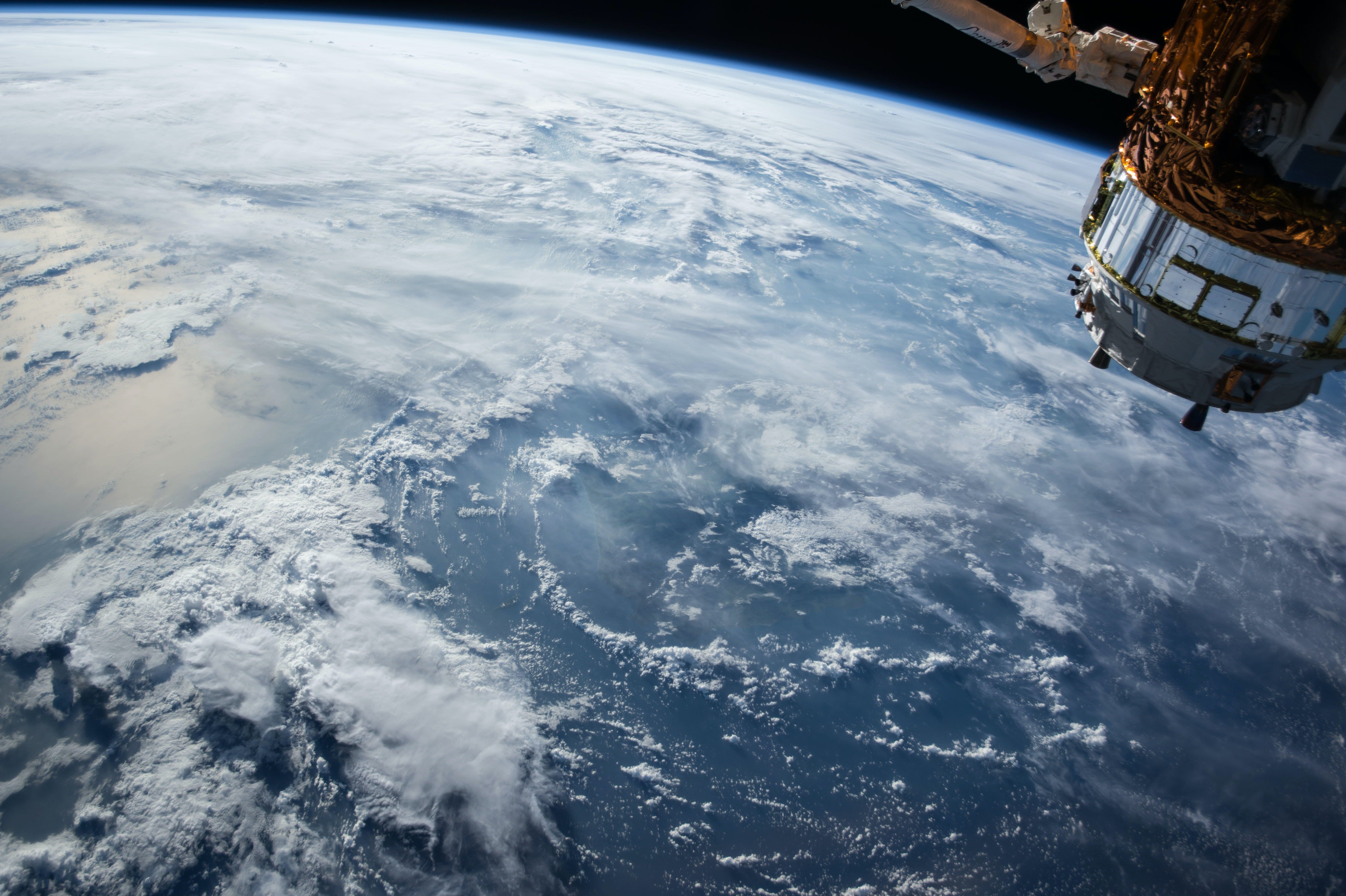
If you’ve watched any television, read any news articles, or opened Twitter even once over the last month you would have heard about a pair of massive space accomplishments.
To be more specific, these “accomplishments” were significant not in what happened, but in who was involved.
Entrepreneurs Richard Branson and Jeff Bezos both sat aboard their own commercial space flights operated by Virgin Galactic (Branson’s company) and Blue Origin (Bezos’s firm). To be clear, these flights were not earth-shattering (pun intended) in their scientific achievements. In fact, one journalist noted that the Blue Origin flight reminded him of, “Alan Shepard and his first Mercury flight that was a rocket booster and a capsule” (Shepard’s flight took place 60 years ago).
Instead, the two trips, in addition to the recent accomplishments of SpaceX (Elon Musk’s commercial space firm with arguably the most impressive resume of any company in the industry mark the true emergence of commercial space activity.
In an arena previously dominated by national governments (particularly the U.S., Russia, China, Japan, and the U.K.) there is now likely to be more interaction than ever before between the private and public sectors in the coming decades of space travel.
Below, let’s hone in on the U.S. space program and NASA in particular to understand the history of the United State’s involvement space, assess where NASA stands today, and project how private companies will impact space policy for generations to come.
One small step
In so many ways, U.S. space policy was born out of a healthy mix of fear and competitive drive. When Russia became the first country to launch a satellite (named Sputnik 1) into space in October of 1957, the U.S. response was let’s say… swift.
In the decades leading up to the Russian launch, space activity was directed through the Department of Defense. After launch however, the National Aeronautics and Space Administration (or NASA) was formed in October of 1958 to centrally organize, fund, and execute American space programs.
From the jump, NASA had ~8,000 employees and over $100 million in funding. In the coming decades, NASA would come to be a shining example of what the public sector can accomplish when the right combination of funding, human capital, and purpose are present.
From 1960 through the early 2000’s NASA accomplished a laundry list of feats that included landing 12 astronauts on the moon, meaningfully contributing to scientific research aboard the International Space Station (ISS) and most recently, landing the Perseverance rover on Mars to take photographs and collect samples from the surface of the Red Planet.
However, even with the long list of accomplishments and the recent success sending a rover to Mars, in some ways the last decade for NASA has been one filled with uncertainty.
With missions to the moon seemingly obsolete, the ISS missions becoming somewhat more routine, and new projects such as sending astronauts to Mars being distant possibilities, some were starting to question NASA’s core organizational purpose.
It’s a backlog
Among those questions, are harsher realities that the agency faces day in and day out. Even without flashy missions like the early moon landings, NASA is still a mammoth government agency with a 25 billion dollar budget to boot.
And yet even with 25 billion in the coffers, Associate Administrator for the Mission Support Directorate Robert Gibbs testified to Congress last week that the agency is facing a maintenance backlog ranging anywhere from 2 to 5 billion dollars due to a lack of adequate funding from Congress.
That maintenance backlog has potentially serious implications ranging from personnel safety (they are quite literally dealing with rocket science) to slowed progress on a number of key missions NASA is currently conducting.
And so, as NASA faces a long backlog of maintenance issues and deals with charting a new course for the future of U.S. exploration in space, where do Bezos, Branson, and Musk come in?
The best ship is partnership
The answer here is likely in two parts.
Bezos and Branson’s companies are for now, likely not part of the space policy equation. Instead Blue Origin and Virgin Galactic appear content to focus on space tourism (i.e., selling some pretty expensive window seats for ~10 minutes in space).
Musk’s SpaceX on the other hand is already proving out the model for what private-public partnerships can look like in the coming decades of space policy.
Last November, SpaceX delivered a crew of NASA astronauts to the International Space Station aboard their Falcon 9 rocket. That successful launch is the first of six trips that have already been sold to NASA by SpaceX.
For SpaceX, the focus on launching NASA astronauts, satellites, and other space cargo is possible & profitable because of years of research and development into reusable rockets and other components that massively bring down launch costs.
For NASA, contracting the launch work to a commercial partner allows the agency to in many ways focus its somewhat limited resources in targeted areas (i.e., returning to the Moon, more scientific discoveries on the ISS, and potentially even a human mission to Mars).
It’s still very early, but there are plenty of reasons to believe that the next wave of space activity will see NASA play an important role in setting the ambition for space exploration and private companies will be ready to help them get there.
Wonk Wrap
What you could think about
A seat on the first Blue Origin flight was sold at auction to a bidder for $28 million. The winning bidder then had to back-out from the flight due to “scheduling conflicts”. Oh what a meeting/dentist appointment/trip that must have been.
With Gratitude,
- Sam